Landri Fae Harmon
NIU Graduating Class of 2027
Art & Tech in PK-12 Classroom
Art Education 343
Media Education in the Art Room
Media Education within the art room is something that's becoming increasingly important in today's generation, especially since students are growing up surrounded by digital images or media that typically influences how they think, act, communicate, understand, and so much more! The art classroom is a great space for this to work for the kids because most of the time, it already centers around observation, interpretations, and creative thinking! But being able to integrate media education does, in fact, help our students to learn better. They can analyze and question the images they see and encounter every day. From what I've observed, Middle School Students often absorb the visual images/messages that they see on social media, TV shows, advertisements, and movies, without even realizing they are doing it.
By being able to bring this into the classroom and have a chat about it, students will begin to develop the ability to identify specific topics within these messages, such as the persuasive techniques, the stereotypes, and maybe even ideas that are biased. Being able to introduce this critical awareness to children will help them to become better people in different ways, such as becoming more thoughtful, passionate, and creative.
Media Education also tends to encourage students to become creators themselves, allowing that creativity to grow to the next level! Using tools such as photography, video, and design apps like ProCreate, students will begin to understand how design choices are very important. These choices can include ideas such as color, composition, font, cropping, and so much more! When we give them that freedom to create their own media-based artwork, they get the opportunity to experience just how much goes into visual communication. "I often solve the 'What do I do now?' conundrum by returning to a childhood favorite—finger painting. I provide students with various types of paint and paper and tell them to have at it. I usually have to remind them that there is indeed a sink in my room amidst the technology, and they’re welcome to avail themselves of it. Students can be tentative at first, more worried about making a mess than abandoning themselves to exploration. The freedom of just having fun, feeling the paint, mixing different colors, creating textures, and yes, occasionally painting each other and/or themselves generally leads to an ah-ha moment. The question then is how to incorporate the act of painting into a digital artwork. At this point, I usually show them examples from various artists" (School Arts Media Collection, p.14). Being able to be free and allow your students to share their perspectives on life and reconfigure their own ideas is what helps shape them into who they are today.
The art room also allows us to have a supportive environment for students who want to explore who they are as a person creatively, as well as how they want to be represented. Through numerous projects that require a look inside their lives, students can build their empathy for others as well as challenge the social norms that are seen within their community through social media.

Image Source: Google Images

Image Source: Google Images
SchoolArts Collection: Media Arts DIGITAL Davis Digital PDF : Davis Publications, Inc. | K-12 Art Curriculum and Resources. catalog.davisart.com/Products/420-4/schoolarts-collection-media-arts-digital.aspx.
Design Education & The Design Process
Design Education plays an important role in helping students understand how ideas can move from a simple concept/idea to a creation that comes to life. The design process teaches students to think critically and creatively, as well as communicate visually, and to not to be afraid to take on any problems you may or may not face on your own. I think what makes Design Education so important and so meaningful is its emphasis on always being able to refine your work, even if you don't think more can be done to it; there's always something. Students learn that ideas don't need to be perfect at the start, and that being able to see your mistakes and fixing them artistically is an essential part of your creative growth.
An important aspect to keep in mind while teaching the Design Process is showing the students that every choice they make must be precise and intentional. Unlike actual artwork that focuses on your personal expression, design requires you to consider any and all things. Little things, such as how this is going to function, who your audience is, what the purpose of your design is, and how it is any different, are what make your design process and work that much different. Eventually, students do learn to ask these questions and more, thinking along the lines of a true designer. Being able to sketch out your ideas, brainstorm, or converse with others helps the design process along, as well as being able to make any adjustments that are suggested to you.
You also want to keep in mind the collaborative part of design work. When students share their ideas with their peers, friends, and family members, it allows them to receive honest feedback that can help them in the long run, and vice versa! This also allows the chance for students to give feedback to others, share their drafts and ideas, and maybe even participate in art critiques. By being able to do these things themselves, students will also learn how to receive feedback constructively and not let their true emotions get in the way of true feedback that could improve their work. "Since the artworks would be composed of many elements, I reminded students of the desired hierarchy of design: shout (a strong focal point), speak (middle-ground elements), and whisper (background elements). Proportion, color, shape, and value were the means by which students achieved contrast. Unity was stressed by means of repetition of color, shape, and overlapping elements" (School Arts Media Collection, p. 29). All of these things are tools and ideas to keep in mind that will help to improve your work, rather than just judging what you made. This skill is not only highly encouraged within the art room, but these skills will also be highly appreciated in the real world.
Design Education does encourage students to not only receive critical feedback for improvements, but it also encourages students to be experimental. Mistakes that are made on your project may end up being the greatest thing that's ever happened to you, as they sparked new ideas to add to your project! By being able to explore the lay out, the colors, fonts, texts, sizes, all of that, you can see that design work is no joke and takes some serious thinking and creative skills, It's very important and very serious, but on the other hand, design work also allows you to be flexible with you process and adapt to what may be thrown your way. By having this freedom, it helps students to rebuild their confidence and bring it to the next level, allowing themselves to think strategically, solve their own problems, and explore other possibilities that come from having this flexibility.

Image Source: Google Images

Image Source: Google Images
SchoolArts Collection: Media Arts DIGITAL Davis Digital PDF : Davis Publications, Inc. | K-12 Art Curriculum and Resources. catalog.davisart.com/Products/420-4/schoolarts-collection-media-arts-digital.aspx.

Image Source: Google Images
Portrait Photography
Jan. 1st, 2026
When taking a deeper look at this article, it’s obvious to me that Ungemah and Vandenover indulge themselves in this topic and explore how gaze and portraits can truly be powerful tools when it comes to photography. By allowing themselves to focus on these elements, they can encourage and inspire students to think critically about what the images are communicating to the audience. With this idea set in mind, it not only enhances the students’ technical skills but also helps to deepen their understanding of art in general.
As it’s highlighted in the article, the use of gaze in portraits usually tends to invite students to consider the relationships between themselves and what they are actually taking a picture of. They also have to keep in mind the relationships that come with the audience and the camera itself. “If the photographer is not aware of their own gaze, a disconnect can emerge between the subject and their photographed image, and “the look that the self receives is ‘profoundly unsatisfying’ because the other does not look at the self in the way that the self imagines it ought to be looked at” (Lutz & Collins, 1993, p. 190)” (Ungemah, Vandenover, 2023, pg 26). If you are not aware of the relationships that are happening between you and your object/camera, as I take it from Ungemah and Vandenover, the audience will notice right away in your photograph. From personal experience, I can attest to that and say yes, it’s very true! It’s all about having that relationship and knowing what you are doing behind the lens. Are you looking at the camera? Are you looking away from it? Are you doing different angles? Is the audience going to understand your message? All of these little things can go a long way when it comes to photography. It also goes a long way when it comes to students and allows them to think/create their own identities/representations of how they see the world through their cameras. They learn to make decisions on the whim, they crucially think about the poses and expressions they are looking for, and they even have to be mindful about what the viewers tend to like. This entire process that Ungemah and Vandenover explain and look into creates a great concept to be aware of in photography, as well as any other art that comes along the way.
Analyze a Media Image
Jan. 28, 2026
Barbie was a film produced in 2023 by a collaboration between Warner Bros. and Mattel. The film’s production was well known for its large budget, which allowed for many opportunities, such as costumes and visual sets that helped create the world of Barbie itself. In the chapter, it happens to mention “...how different audiences are targeted by a particular medium…for example…different sections of the audience, as defined in terms of age or social class” (Buckingham, 2003, p.55). I see this part truly coming into the movie when looking at the director herself, Greta Gerwig. From what I can gather, this was intentionally done by the companies, as her background in directing has had strong feminist themes, complex female characters, and a background in indie cinema. I think this was a great idea on their part. Bringing in someone as powerful as her into this movie and creating it while addressing different audiences within the movie is quite interesting. I have always been in awe of the idea of being able to bring in someone with a different background/lifestyle and put their own spin on something as popular as this American product. I think Gerwig did a fantastic job being able to address the audience in many ways, as well as touching their hearts on a more personal level throughout the movie. As for the production team, they, as well as the companies, heavily invested in this movie. They advertised as much as possible, did social media campaigns, had partnerships through branding, and even were able to get Margot Robbie to come in and play Barbie herself, as well as help produce the movie. It was quite amazing what they did.
The use of language in the film had quite a variety in my mind. I felt they used more of an upbeat and witty dialogue, but also were able to add moments of strong emotions and questions of identity. It felt sophisticated and humorous, and yet, it still strongly appealed to people of all ages. But how can someone tell that these emotions and language were captured? Through the angles. The angles of the camera are what I feel capture emotions the most, and that goes for any film/show/photograph. Think about Stranger Things for a second here. The way the camera angles towards Mike’s face when El leaves, or Will’s white eyes when he got his powers, El’s body jumping over the fence, even from behind Nancy’s back with a gun in her hand, the camera can capture all of these emotions, making those watching it feel the same feeling. Barbie, in particular, between the camera angles and the narration, I think, breaks that “fourth wall” that a movie typically has. The characters are almost directly engaging with the audience and acknowledging the world around them that isn’t in the movie.
Representation here is a little different. I see Representation being shown in two different ways. One being as it mentions in the book, where it says “the media does not offer us a transparent ‘window of the world’, but a mediated version of the world” (Buckingham, 2003, p. 57). I think almost every movie is that way. It offers us another version of the world that we live in, just in a different aspect. Think about Harry Potter. Interpret it into our world, and Harry Potter is just like NIU, it’s another University at hand. We may not have “wizarding magic”, but we do have “magic” as in skills like art making and collecting data through science. We differ from it, but not really. Barbie does just that. It’s our world, only more perfect. It’s us, but it’s not. It gives us a glimpse into another world that could potentially be ours in another lifetime. Like a different dimension in time. Now, the other representation I see is the issues at hand that come into our world. The movie promotes the idea of the issues we have with gender representation by using the many Barbies and Kens. The movie also challenges the traditional beauty standards, gender roles in society, unrealistic expectations in women, insecurities and struggles in males, and so much more. Barbie’s world is a “mediated version” of our world. There is so much someone can relate to in this movie, and show us that not all things here are perfect, not in a movie, and not in real life.
Last but not least, the audience. This film targets a pretty broad audience, from fans of Barbie and the younger generation, to just viewers who are interested in feminist films or are general moviegoers. Their marketing strategy aimed to appeal to any and all people, allowing not just females and/or young children to be excited for this movie. I had friends who were SO excited to see Barbie, and they were guys! It’s crazy to me how much influence a film can have on someone, even something as simple as Barbie had that much effect. But, with the messages the film provides for the audience, as well as how popular the film turned out to be, I can see why people were so influenced. It became a cultural phenomenon for everyone all over the world.
Buckingham, D. (2003). Media education: Literacy, learning, and contemporary culture. Polity Press.

Image Source: Google Images
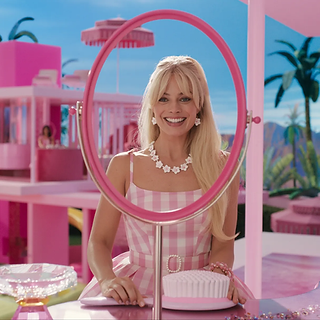
Image Source: Google Images

Image Source: Google Images

Image Source: Google Images
Explore Bias in an Art Classroom
Feb. 4, 2026
As a future educator, specifically a future elementary art educator, I feel there are many areas that we can explore as a class based on issues we have today with AI and being biased. It is important to first, and foremost, discuss the representation that there is within art in today’s world. I would start by asking a few simple questions to my students. See what they know about AI as well as what being biased means in a classroom, to your peers, to the whole world. For me, I would have to be pretty careful with my words, not only to avoid offending, but to make sure my littles can understand what is being said. After acknowledging what they know and explaining what the words mean, I would begin my class by examining how different groups from all around the world are represented (or not represented in art). I would give them countless examples and ask my students questions regarding what the artwork shows, what feelings they get from the pieces, and why they are biased. Examples I would show are mentioned throughout the reading, but an issue in particular would be racism. In the reading, it says, “...a framework for labeling individuals as inherently racist; it is about identifying systems that perpetuate racism. An example of a CRT-based question is, Why are Black individuals disproportionately depicted as criminals and classified as lower income by algorithms?” (Lenard, Wor, 2024, p.21). Racism throughout history has been a major issue and still can be today, especially when it comes to art and how the world sees it. It’s almost, in a sense, advertised in art to the world that black individuals are violent, criminals, and do awful things when that simply is not true! Besides what’s mentioned in the reading, there is another website that describes the Brute Caricature in the Jim Crow Museum. It is really quite something to read about and see throughout history the misfortune and tragic misinterpretations that take place with black individuals, as well as what is shown in art forms.
Besides examples in history that show racism, as well as in today’s world, there is also AI to think about and explore artistically. After showing many examples of biased artworks as well as racism, I would have my students use AI art generators to create images based on different prompts. I would discuss with them how AI might reflect on different biases in the data it was trained on, such as stereotypes or even the underrepresentation of certain groups. There is also lots of mention of this very thing within the reading. “Attempting to use Midjourney to create empowering images of fat Black women, JerVae noted that they needed to be very specific with language regarding fatness and Blackness. This is because the bias of the algorithm is inclined to make text prompts like “beautiful” or “pretty” automatically thin and/or have Eurocentric features. JerVae’s work highlights the significance of how data are curated and coded because the language used in Midjourney text prompts is heavily skewed with a Eurocentric bias” (Lenard, Wor, 2024, p.24). AI programs are coded and calculated to be biased towards black individuals, which is incredibly racist to me. Not one person should have to feel as if they need to be VERY specific when it comes to generating an image for themselves. AI has been coded to focus more on white individuals and leave out black individuals, or to leave them unrepresented.
After having my students see these ways of being biased and racist, I would then start encouraging my students to create art that celebrates diversity and other stereotypical cultures. I would inspire my students to do research, draw people from different backgrounds, and create stories within their artwork that feature diverse identities. I’d also have my students engage in activities, either in my classroom or in the community, that promote critical thinking regarding technology and the pros/cons of its impact on society today. I’d have them research AI to a deeper level and have them brainstorm ways on how to make AI programs, such as Midjourney, inclusive and fair to all.
Nicholas Leonard & Johnson Kwame Wor (2024) Addressing Algorithm Materiality and Bias Through Art: Exploring Social Media–Augmented Reality Features, Art Education, 77:4, 20-26, DOI: 10.1080/00043125.2024.2330342
Art with a Message
Feb. 11, 2026
“An image can be made to say many things, depending on how it is presented.”
This poster was created by the Guerrilla Girls in 1989 and called “Do Women Have To Be Naked To Get Into the Met Museum?” It’s a form of protest meant to call out the art world’s sexism and how men are very misogynistic towards women. The question of “Do women have to be naked to get into the Met Museum?” isn’t exactly literal, although some may argue that it was. Nevertheless, it’s more of a provocative way of pointing out that women’s bodies are often displayed in art with nudity. Folks can’t see past the woman’s body for something more than a figure, or more specifically, men can’t see past it. They can’t see the brains and beauty that a woman holds in her heart and mind. As you can see, the poster also uses statistics to point out the number of female nudes versus the number of artworks done by female artists. This goes back to points in the video where women were not only nude in different artworks shown, but the fact of the matter was that there were no women artists mentioned within the video itself. Back in the day, the world was controlled by men, which only led women to become not only invisible to the eye for certain elements of life, but it also gave women no satisfaction in becoming more than just a warm body and a person who would take care of the baby at home during the war. This work, although done later than when the video was produced, was meant to shock the world into recognizing the imbalance of nature and question the moral values within the art world. The message is quite simple and aimed towards anyone involved in the world of art, from casual audiences at a museum to powerful men. It challenges them to think about why this imbalance exists and what can be done to address it, ultimately giving women a greater opportunity for recognition.

Image Source: Google Images

Image Source: Google Images

Image Source: Google Images
Image Source: Google Images
Art as a Tool for Self-Inquiry
Feb. 25, 2026
Ethnography is almost like diving headfirst into someone else’s world and trying to understand not only what they are going through, but what their culture is, as well as their way of life from their point of view. It can include potentially hanging out with people, people-watching, seeing what they do, what they say, how they react, who talks to them, how to see the world through their eyes, and so much more. You try to understand a culture from someone else’s perspective, rather than just looking at it through your eyes, as well as looking at it as an outsider.
Let’s talk about art in general. Art and being able to practice it can serve as a great tool for self-inquiry. Art can help to mirror your feelings and thoughts that are trapped inside your head. When someone creates a piece of artwork, they make choices that help to reveal their preferences, who they are as a person, their perspectives, and even their biases. The process of art can even help to unlock your unconscious thoughts that are lying in the back of your mind, that are locked away. Another way to think about this is through the usage of media and styles that someone can use in their artwork. This can also help to explore new areas of your personality as well. Each brushstroke you make, each choice of color you make, each mark you make with your pencil, they all represent a different aspect of your “inner self”, allowing you and your self-consciousness to understand yourself in ways you never knew could be possible. Art provides insights into your personal growth over time as well as your personal changes. Being able to note these changes as well as see your shift in styles or your choice in recurring themes can really help to evolve your experiences as well as emphasize and evolve your beliefs down the road.
As the article mentions, they talk about introducing the program of STEAM into the arts, which is a great idea. It mentions ideas about bringing in multisensory learning and its many approaches to the program. They revolve around the idea of being able to include any students in the arts with this program. “Multisensory learning is an educational approach that engages multiple senses, including hearing, sight, speech, smell, touch, and emotions (Grosvenor, 2012). As Thyssen and Grosvenor (2019) emphasized, involving the senses in learning is critical to the formation of embodied knowledge. Swierad et al. (2021) also discussed constructive learning, which integrates students’ cultures within a multiconnected framework encompassing language, community, metaphor, and context through body movement with sound and visual simulation via storytelling, engaging the entire family in learning. This approach fosters a deeper understanding of the subject matter and promotes cultural relevance in education by using art and science” (Lim, Lonsway, 2024, p.29). Because this program is very high-tech and well involved with all students, the kids were able to do many different things! This included using programs such as Microsoft Sound and Makey Makey to make amazing art projects, which gave the kids a wonderful opportunity to enjoy art differently. They got to see what it was like to step into someone else’s shoes or see the world in someone else’s eyes for a time. This helps students become not only more aware of their surroundings and what others are going through every day, but it also gives the students an opportunity to be able to see someone live in the same world as them, but just live in a different culture and lifestyle than what the average normal kid would.
Kyungeun Lim & Courtney Lonsway (2024) Cultural Soundscape Mapping:
An Innovative Lesson for STEAM–Multisensory Integrated Education, Art Education, 77:4, 28-35,
DOI: 10.1080/00043125.2024.2330106